What is Goju-Ryu Karate?
Goju-Ryu is one of the major traditional Okinawan styles of karate, combining hard and soft techniques to create a complete martial art. Discover the history, philosophy, and unique characteristics of this powerful style.
The Meaning of "Goju-Ryu"
Go
Hard
Ju
Soft
Ryu
Style/School
Goju-Ryu (剛柔流) literally translates to "Hard-Soft Style". This name perfectly captures the essence of the style - a harmonious blend of powerful, dynamic techniques (Go) with circular, flowing movements (Ju).
"The heart of Goju-Ryu karate is in the poem of the Eight Precepts of the Kempo, which states: 'Everything in the universe breathes hard and soft.'"
— Chojun Miyagi, Founder of Goju-Ryu
The Hard and Soft Concept
Go (Hard) 剛
- Closed hand techniques (punches, strikes)
- Dynamic linear movements
- Power and strength
- Offensive techniques
- External strength development
Ju (Soft) 柔
- Open hand techniques (blocks, deflections)
- Circular flowing movements
- Flexibility and yielding
- Defensive techniques
- Internal energy cultivation
In Goju-Ryu, these opposing forces are not in conflict but in perfect balance. Hard techniques flow into soft, and soft techniques can become hard. This duality reflects the natural rhythm of breathing - inhaling and exhaling, tension and relaxation, attack and defense.
Key Characteristics of Goju-Ryu
Goju-Ryu is distinguished by several unique features that set it apart from other karate styles. These characteristics reflect the deep Chinese influences and Okinawan heritage of the art.
Breathing Techniques (Ibuki)
Goju-Ryu places special emphasis on coordinated breathing. The unique "hard breathing" (ibuki) method is integral to kata like Sanchin and Tensho, developing internal strength and focus.
Circular Movements
Unlike the predominantly linear movements of some styles, Goju-Ryu employs circular blocks and strikes. These circular motions redirect force and create powerful techniques from close range.
Close-Range Fighting
Goju-Ryu specializes in close-quarter combat with emphasis on gripping, controlling, and joint manipulation. Training includes extensive grappling and throwing techniques.
Sanchin Kata (Foundation)
Sanchin kata is the cornerstone of Goju-Ryu training. This dynamic tension exercise develops proper structure, breathing, and the internal strength essential to the style.
Chinese Influence
Goju-Ryu retains strong influences from Chinese martial arts, particularly Southern Chinese styles. This is evident in the circular techniques, stances, and philosophical approach.
Body Conditioning (Hojo Undo)
Traditional Okinawan training equipment like makiwara, chi-ishi, and kongoken are integral to Goju-Ryu. These tools develop the physical strength needed for effective techniques.
The Founder: Chojun Miyagi (1888-1953)
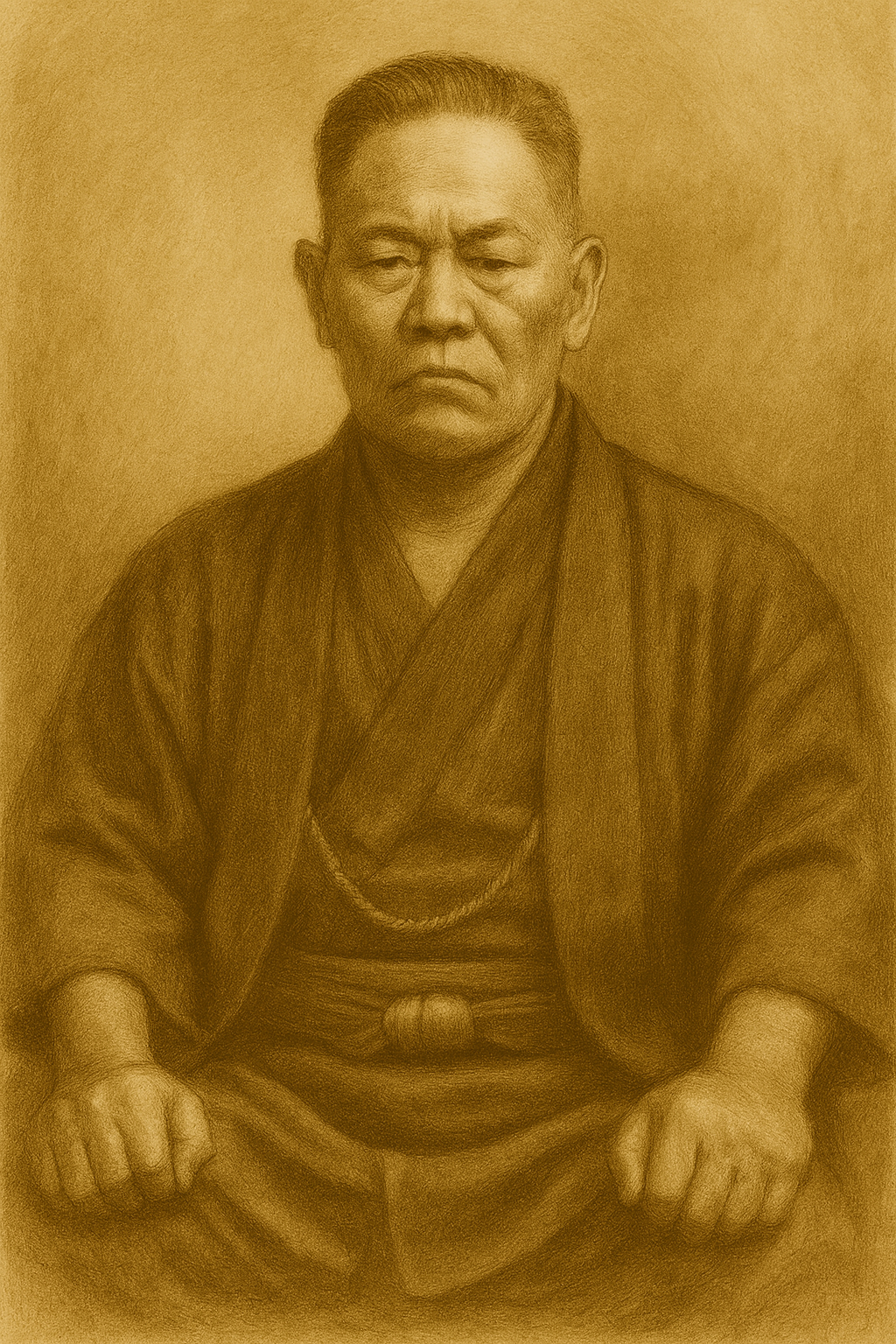
Chojun Miyagi (宮城 長順)
Chojun Miyagi created Goju-Ryu Karate-Do, formalizing the teachings he received from his master Kanryo Higaonna and adding his own innovations to create one of the most respected karate styles in the world.
Born in Okinawa
Born into a wealthy merchant family in Naha, Okinawa. Began training in martial arts at age 11.
Studies with Higaonna
Became a student of Kanryo Higaonna at age 14. Trained intensively for 14 years until Higaonna's death in 1916.
Journey to China
Traveled to Fuzhou, China to research the roots of his teacher's martial arts and study Chinese fighting systems.
Names the Style
Officially named the style "Goju-Ryu" (Hard-Soft Style), inspired by the "Eight Precepts" of Chinese Kempo.
Official Recognition
Goju-Ryu registered with Butokukai (Japan Martial Arts Association), becoming an officially recognized style.
Legacy
Passed away on October 8, 1953, leaving behind a systematized martial art practiced worldwide today.
Miyagi's Contributions
- Systematized the curriculum - Created a structured teaching methodology with specific kata and exercises
- Developed Gekisai kata - Created two beginner kata to make training more accessible
- Promoted karate publicly - Worked to spread karate beyond Okinawa to mainland Japan and internationally
- Emphasized philosophy - Integrated the spiritual and philosophical aspects of martial arts into training
- Created the Kongoken - Invented this unique 70kg conditioning tool for strength development
The Twelve Classical Kata of Goju-Ryu
Goju-Ryu is defined by its twelve classical kata, each teaching specific principles and techniques. These kata form the complete curriculum of the style, from fundamental training to advanced applications.
Foundation Kata
Sanchin (三戦)
"Three Battles"
The cornerstone of Goju-Ryu. Develops breathing, dynamic tension, and proper structure. Practiced throughout all levels.
Tensho (転掌)
"Rotating Palms"
The soft counterpart to Sanchin. Emphasizes circular movements, breathing, and flowing techniques.
Beginner Kata
Gekisai Dai Ichi (撃砕第一)
"Attack and Destroy - First"
Created by Miyagi for beginners. Introduces fundamental techniques and basic principles.
Gekisai Dai Ni (撃砕第二)
"Attack and Destroy - Second"
Builds on Dai Ichi, adding open-hand techniques and circular blocks.
Intermediate Kata
Saifa (砕破)
"Tear and Smash"
Seiyunchin (制引戦)
"Pull and Battle"
Shisochin (四向戦)
"Four Direction Battle"
Sanseru (三十六手)
"36 Hands"
Seipai (十八手)
"18 Hands"
Advanced Kata
Kururunfa (久留頓破)
"Holding Ground"
Seisan (十三手)
"13 Hands"
Suparinpei (壱百零八手)
"108 Hands"
The longest and most complex kata in Goju-Ryu. Represents the culmination of technical mastery.
For detailed information about each kata, visit our Kata page.
Benefits of Goju-Ryu Training
Goju-Ryu offers comprehensive development for practitioners of all ages, from children to seniors. The training develops not just physical skills, but mental discipline and personal character.
Physical Fitness
- Cardiovascular endurance
- Strength and flexibility
- Coordination and balance
- Core stability
Self-Defense
- Practical fighting techniques
- Situational awareness
- Confidence in ability
- Close-range combat skills
Mental Development
- Focus and concentration
- Discipline and perseverance
- Stress relief
- Problem-solving skills
Goal Achievement
- Structured progression system
- Regular measurable goals
- Sense of accomplishment
- Long-term dedication
Community
- Supportive training environment
- Lifelong friendships
- Mutual respect
- International connections
Personal Growth
- Self-confidence
- Humility and respect
- Leadership skills
- Cultural awareness
